About GYCA
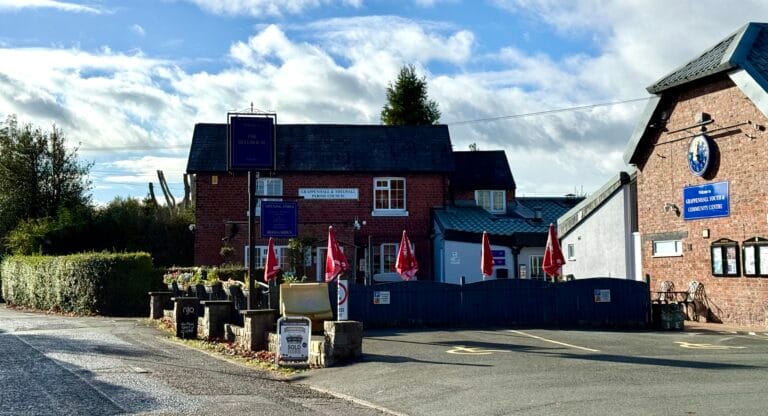
The History of the Bellhouse and the GYCA
Any visitor to The Bellhouse, either in its new form or during its previous guise as the Bellhouse Club, may ask ‘why the Bellhouse?’ Many could make a logical connection to the bells of Grappenhall’s nearby St Wilfrid’s Church, given its place in the village’s long history. In fact, the only connection with the church bells is the longstanding tradition of the bell ringers to enjoy a post-campanological pint at The Bellhouse’s bar!
The real origin of The Bellhouse’s name is the man David Bellhouse, whose life coincided with and was forged by the rapid change and upheaval of the Industrial Revolution. By the time Bellhouse died in 1840, he was a millionaire by today’s standards who left behind him a Manchester-based business empire which ranged from timber to cotton, property and construction.
David Bellhouse was born in Leeds in 1764 to James and Ellen Bellhouse. Like so many of the time, he grew up with little or no formal education, teaching himself to read, write and do arithmetic. David joined his father in the building trade before moving to Manchester in 1786. It was in Manchester that his rise from obscurity would truly begin.
The Manchester of the late 18th Century was a city of unprecedented change. The Industrial Revolution was transforming the city and seemingly limitless expansion of the cotton industry led to the population of Manchester doubling within about thirty years. This growth of course generated a great need for new housing and this demand proved propitious for the newly arrived joiner David Bellhouse.
Initially gaining employment with the builder Thomas Sharp, Bellhouse soon began to make money out of the building boom of the 1780’s. Working with partners and for himself, Bellhouse speculated on land and undertook building projects to cater for the burgeoning workforce. Over time his building interests would grow from ‘back-to-back’ houses for workers to cotton mills, warehouses and civic institutions. Bellhouse built the Portico Library which opened in 1803, going on to build the 1822 Town Hall – the predecessor of the current building on Albert Square. You can still see the façade of Bellhouse’s Town Hall which now stands in Heaton Park, having been moved there upon the building’s demolition.
With growing wealth Bellhouse donated money to the cause of working-class education, not least through supporting the Manchester Mechanics’ Institution. He also served as a Surveyor of Highways and Police Commissioner; this public service perhaps motivated by his Methodist upbringing as well as the potential for influence on town planning and public spending.
As Bellhouse’s business grew, he had a growing need for timber and other supplies. He met this need by acquiring new space on the banks of the 1804 Rochdale extension of the Bridgewater Canal. Not only did he now import his own building materials along the canal from Liverpool, but he also set up a timber merchants and saw mill. It was also this new association with the Duke of Bridgewater’s canal that likely influenced his decision to acquire a second home away from the industrial frenzy of Manchester.
Looking for some kind of rural retreat in the early 1800’s, as well no doubt as a good investment, Bellhouse was drawn to farmland in Grappenhall near the Bridgewater Canal; his choice probably swayed by his wife, Mary, who was originally from Warrington. With the convenience of the canal to connect him to his Manchester business, Bellhouse owned the farm until his death in 1840 after which his family sold the farm in the 1850’s. The farm buildings together with the lane on which they are situated were named after David Bellhouse, making a permanent though little-known legacy to a man who rose from modest beginnings to build a business portfolio that put him at the political, economic and social centre of Manchester life in the first half of the 19th Century – a life which demonstrates and puts a human perspective on the extraordinary force of change with was the Industrial Revolution.
The Development of Grappenhall Community Centre in 1972 to 1979
Well known Warrington town centre businessman, John Hales who ran and owned the family business The Waysiders, was largely responsible for the development of Grappenhall Community Centre. He approached Grappenhall and Thelwall Parish Council and the former Warrington New Town Development Corporation, with proposals to refurbish a derelict farm building in Bellhouse Lane, Grappenhall.
The project took eight years to complete from 1972 to 1979 and construction work cost circa. £15,000, thanks largely to voluntary work arranged by Mr. Hales. Prisoners from the then Appleton Thorn Open Prison helped with the building work. The Community Centre was completed and opened by Mr. Hales on 23rd May, 1979 and has served the community ever since.
The Community Centre Bar was completed first and opened in 1973 as a member’s club and the income from the bar was used to support the costs of refurbishing the various barns on site, including the Olde Barn, a Sports Hall and Studio.
Since opening, Grappenhall Pre School, Warrington Amateur Radio Club and the Model Railway Society have all made their homes in the converted buildings.
In 2011, Grappenhall Youth and Community Association was registered as a charity with the Charity Commission with the Bellhouse Bar becoming a public house open to everyone. The income from the Bellhouse still supports the GYCA to ensure its continuation as a community asset.